
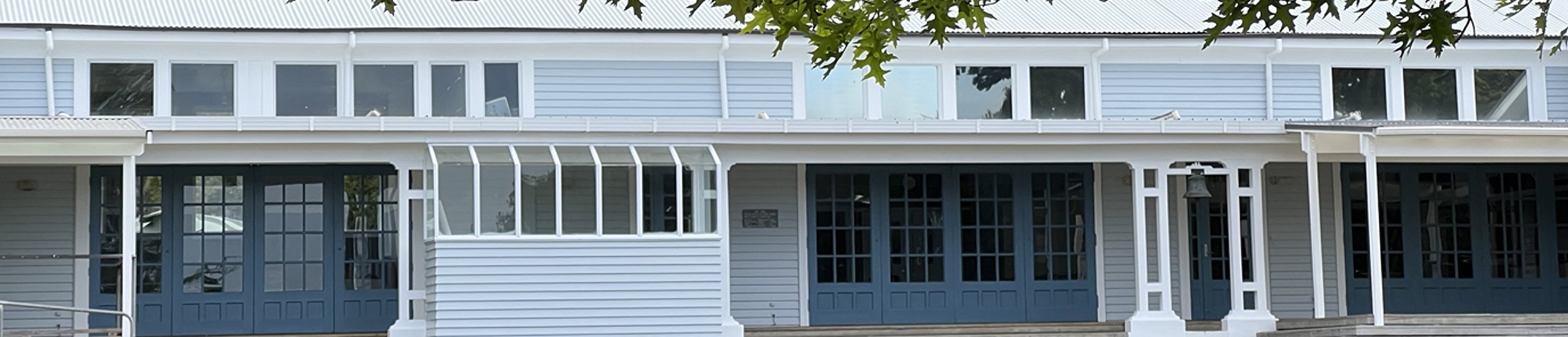
 The teaching of reading, writing and mathematics is our priority; alongside these foundational subjects we offer a range of further learning opportunities covering the breadth and depth of the New Zealand Curriculum. We are constantly reviewing what and how our students are learning so that classroom time is engaging, interesting and relevant to their lives.
Reading
As a parent, one of the most important things in life is seeing your child do well in school and life; reading is a key to this as through being able to read well, children are able to access knowledge in all other learning areas and find out information for themselves.
We use a structured literacy, phonics based approach to the teaching of reading called iDeal. This evidence – based framework supports literacy development at all year levels. Children are taught how to:
recognise the sounds that each individual letter makes
identify the sounds that different combinations of letters make - such as ‘sh’ or ‘oo’; and
blend these sounds together from left to right to make a word. Children can then use this knowledge to ‘decode’ new words that they hear or see. This is the first important step in learning to read.
Children who practise reading often through phonics, get better. Over time, children are able to develop into fluent readers who can quickly recognize familiar words and easily sound out new words they encounter. They go on to read any kind of text fluently and confidently, and to read for enjoyment. As children develop their reading skills and learn about people, places, and events outside of their own experience, they begin to imagine how they would feel in that situation. They see the world with new eyes and can better visualize the descriptions of what they read.
Writing
This year, the Writers Toolbox is being introduced at all levels at Kaihere School. The Writers Toolbox teaches students how to write well and supports their work in all other learning areas.
By the end of Year 8, the aim is that students are able to write a well constructed essay or report, using sentence conventions and with accurate spelling and grammar. The Writer’s Toolbox teaches students a range of important writing skills such as sentence styles, paragraph types, style, structure and being accurate in one’s writing.
Handwriting
Handwriting in the junior years is strongly linked to basic reading and spelling achievement. For example, when children learn how to form the letter m, they can also be learning its sound. Attention to the links among handwriting, reading and spelling skills can help to reinforce early achievement across these areas.
Because handwriting is a basic tool used in many subjects, such as communicating, taking notes and completing assignments, poor handwriting impacts on all other learning areas. We ensure students have daily practice in handwriting.
Mathematics
Mathematics is important in almost every area of life. We believe that to be good at mathematics, regular practice and reinforcement of basic facts is necessary (similar to our approach with early phonics). Daily practice of addition, subtraction, multiplication (times) and division tables – depending on the year level – is vital for developing a strong mathematics programme. This practice is done daily in class and encouraged at home, too.
Being able to apply maths to problems in the real world is a key to learners seeing the relevance of Mathematics to their lives. Mathematics No Problem is our school wide numeracy programme with engaging textbooks and workbooks to reinforce and develop students’ mathematical skills.
Financial Literacy
Financial Literacy is included in the Mathematics programme. Financial literacy is the ability to understand and effectively use various financial skills, including running a business, budgeting for a family or understanding how money works.
The earlier children start to know about money and how it works, the better of they will be because education is the key to a successful financial future.
Science
Learning in science is fundamental to understanding the world in which we live and work. It helps people to clarify ideas, to ask questions, to test explanations through measurement and observation, and to use their findings to establish the worth of an idea. In today’s world, Science offers huge opportunities for employment. The Kaihere School board has invested considerably in resources for the science learning area. Working alongside the hands-on resources are excellent science texts which give children a significant theoretical base on which to build. Our Science programme also allows for integrated studies across other learning areas.
Learning Science includes:
Agriculture and Horticulture
Agriculture and Horticulture are basic components of the Primary Industries which are vital to the New Zealand economy. The purpose of introducing agriculture and horticulture within the Science learning area is to give children specific knowledge as well as practical skills that are relevant to the culture of our rural school. We have a specialist Science and Primary Industries teacher on staff who will be responsible for this programme. The learning will also tie in with Calf Club day in the spring.
Integrated Studies: Social Sciences, Technology and the Arts
While reading, writing, maths and science form the foundation of our learning programme, it is also important that students experience a broad range of other learning areas including the social sciences (humanities), Technology and the Arts. These are woven together in our Integrated Studies programme giving rich contexts for learning.
Social Sciences
Social Sciences (Geography, History and Social Studies) gives students an understanding of the real world around them. Students learn about places, cultures, and historical events around the world, why events happened and the impact of these. Through Social Sciences, children learn about, understand, and appreciate cultural differences which is important in our multi-cultural world.
Technology
Students learn practical design and product making skills that are invaluable for both future careers and recreation as well as ‘hands on’ careers.
Our long term plan is to set up a ‘MakerSpace’ where students are encouraged to use design and technology processes to create and make things.
Digital Technologies
While we want to ensure that our young people have good handwriting skills, we also understand that have good digital skills is necessary in today’s world. Children have access to chromebooks for research and learning purposes. The time that children are allowed on screens in the classroom is limited but purposeful.
We also teach digital responsibility, to ensure that they know how to keep themselves safe online. Students and parents sign a contract at the beginning of each year to reinforce responsible use of chromebooks.
The Arts
The Arts not only enhance creativity and self-expression but also contribute to students’ overall development such as creative thinking, encouraging cultural awareness, improving fine motor skills, communication, teamwork and language skills. Art isn’t just about colours on a canvas or notes in a piece of music; the Arts are powerful forms of expression that recognise, value, and contribute to the unique bicultural and multicultural character of Aotearoa New Zealand, enriching the lives of all New Zealanders.
The arts learning area comprises four disciplines:
The school accesses specialist teachers in these areas so students develop the skills, knowledge, attitudes and understandings develop as they go through Primary School.
Physical Education, Sports and Health.
Sports have been an integral part of human civilization since ancient times. Whether it’s a game of backyard cricket or a grand international event, the impact of sports goes beyond mere entertainment. Pupils at Kaihere School regularly participate in physical activity and are given opportunities to learn the rules and skills involved in different sports including cricket, hockey, tennis, football rugby, touch and athletics.
There are so many benefits in young people being involved in sports and team games. Keeping physically actively is good for mental health, it encourages team work and collaboration; students learn to set goals and develop leadership skills; it builds confidence and teaches that life is not always fair and that sometime you win and other times you lose. Most important our young people learn how to win with humility and lose with grace.
Health and Wellbeing
Our health teaching is broad brush and focuses on age appropriate material which helps enhance the lives of our young people. Learner wellbeing is based on Te Whare Tapa Whā - a model which presents wellbeing (hauora) as four connected domains ie physical, mental, social / community and spiritual health such as a sense of meaning and purpose.
Te Reo, Tikanga and Te Ao Māori
We acknowledge that Te Reo Māori (Māori language) holds a special place in New Zealand’s culture. As an indigenous language, it carries great meaning and history. We understand that we have a responsibility, under Te Tiriti o Waitangi, to protect Te Reo and we, therefore, aim to use Te Reo in everyday life of school and the classroom.
Similarly, Te Ao Māori and tikanga Māori are woven into the tapestry of how we do things at our school. Karakia are used in assemblies, for example and a Māori perspective (Te Ao Māori) is integrated through the learning programmes.
Parents, please support our local businesses



Call Direct

Send Email

Visit Website
Call Direct
Send Email
Visit Website
Visit Website